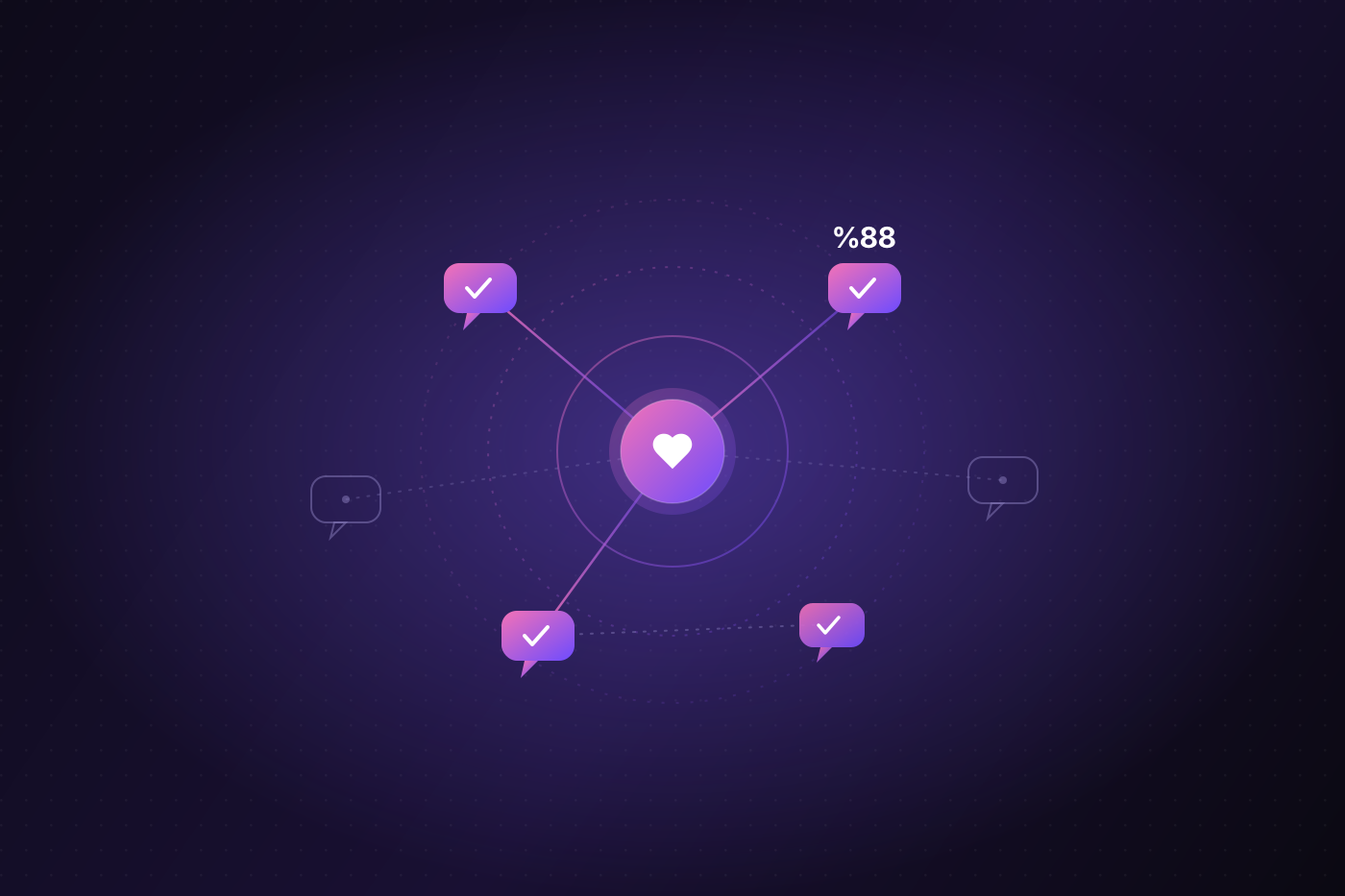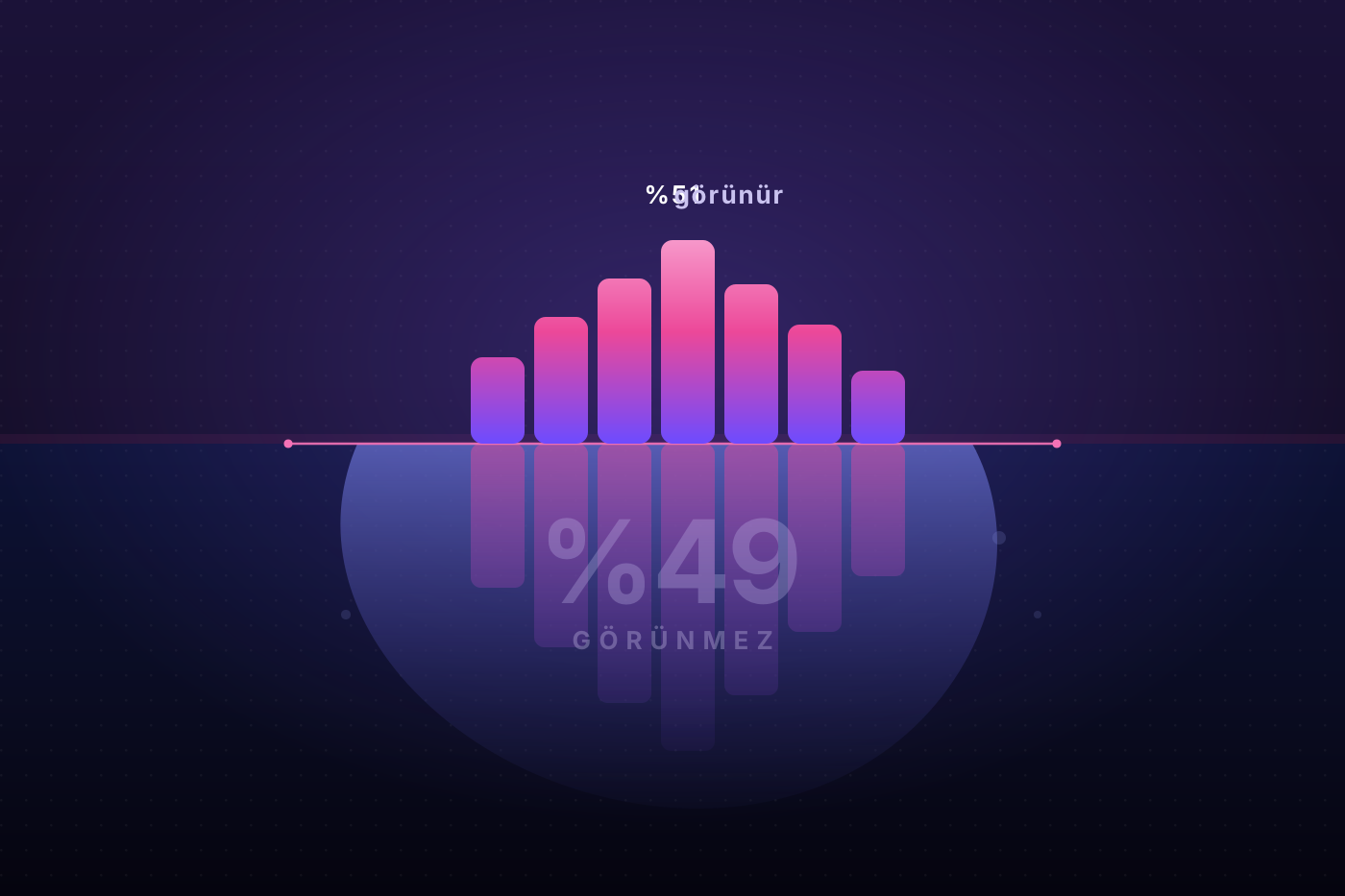
Thousands of comments pile up beneath a campaign post. These comments are the most honest record of what the audience feels about the brand — but they’re also the hardest data to read. No one can sit down and manually classify thousands of comments one by one. This is the gap sentiment analysis fills: it reads the feeling inside the comments at scale.
But good sentiment analysis is much more than simply tagging comments “positive / negative.” The real challenge is capturing the subtleties of language.
What is sentiment analysis?
Sentiment analysis is the task of detecting the emotional tone a text carries. At its simplest it decides whether a comment is positive, negative, or neutral. But what a brand truly needs is more than these three boxes: telling whether the audience is indifferent or enthusiastic, whether a criticism is constructive or angry, whether praise is sincere or sarcastic.
The hard part: sarcasm and implicit meaning
Human language isn’t literal. “Great, exactly what I needed 🙄” is positive word for word, yet its tone is entirely negative. “This is it, for that price?” looks like a question but carries dissatisfaction. An insult wearing a mask of praise, a mockery impersonating a persona, or a criticism delivered by implication — all of these easily fool a shallow analysis.
The real value lives in an analysis that can catch this subtlety. It is a comment’s true intent that must be read, not its visible words. Modern AI-powered analysis aims at exactly this: it evaluates each comment together with its context and separates sarcasm and implicit tone from plain praise.
Seeing purchase intent
Beyond sentiment, the signal a brand values most is often intent. Comments like “Where can I buy it?”, “How much is it?”, “How does the sizing run?” are more valuable than even a positive feeling — because they show direct commercial interest.
A good analysis classifies comments not only by their feeling but by the intent they carry:
- Praise / satisfaction — the audience loved the product or content.
- Purchase intent — the audience is ready to act.
- Question / hesitation — there’s interest, but an obstacle is waiting to be removed.
- Criticism / disappointment — there’s a problem that needs attention.
- Indifference / irrelevant — there’s engagement but no value.
This distinction offers a far more actionable picture than a vague conclusion like “the campaign was liked.”
Why does scale matter?
A single comment can be interpreted by a human too. But a campaign’s real picture only emerges when all comments are read together. Is the majority enthusiastic or hesitant? Does a particular objection come up again and again? These patterns are only visible at scale. AI reads thousands of comments through a consistent framework and surfaces the pattern within minutes. The same reading also exposes generic, hollow patterns — it’s one way to see how much of an account’s engagement is real.
Comments are a strategy, not just “hygiene”
Don’t see sentiment analysis only as a post-campaign report card. The objections, questions, and desires that recur in the audience’s language can shape the next campaign’s message — even the product itself. Comments are a source that steers the future, beyond measuring the past. We covered how these signals connect to campaign success in our piece on measuring a campaign’s real impact.
Summary
Sentiment analysis makes the audience’s voice scalable. But its value lies in how subtly it can read language: an analysis that can separate sarcasm from praise, indifference from enthusiasm, and intent from mere feeling shows a brand what its audience genuinely feels. Done right, this means to stop guessing and start listening.