The most basic question to ask before working with a creator is: is this account’s engagement real? A high follower count can look impressive; but if some of those followers are bought, or the engagement is artificially inflated, the budget you pay goes to a ghost audience.
Measuring authenticity is not a “bot hunt.” The goal is not to accuse an account, but to understand how much real value you can expect from the collaboration. Here are the signals to look at.
1. Follower-to-engagement mismatch
The most basic signal is the balance between follower count and engagement. An account with a very large following but very few comments and likes on its posts raises a question mark. The reverse is also possible: engagement that is abnormally high relative to followers, yet hollow, can also point to inflation.
The trick here is to look at the account’s overall pattern rather than a single post. In a healthy account, engagement moves in a reasonable proportion to follower size.
2. Sudden, unexplained spikes
Organic growth is gradual. If an account’s follower count or engagement suddenly jumps in a short time with no viral content or campaign behind it, that can be the sign of an unnatural intervention. Looking at the curve over time is far more informative than looking at a single snapshot.
3. Generic comment patterns
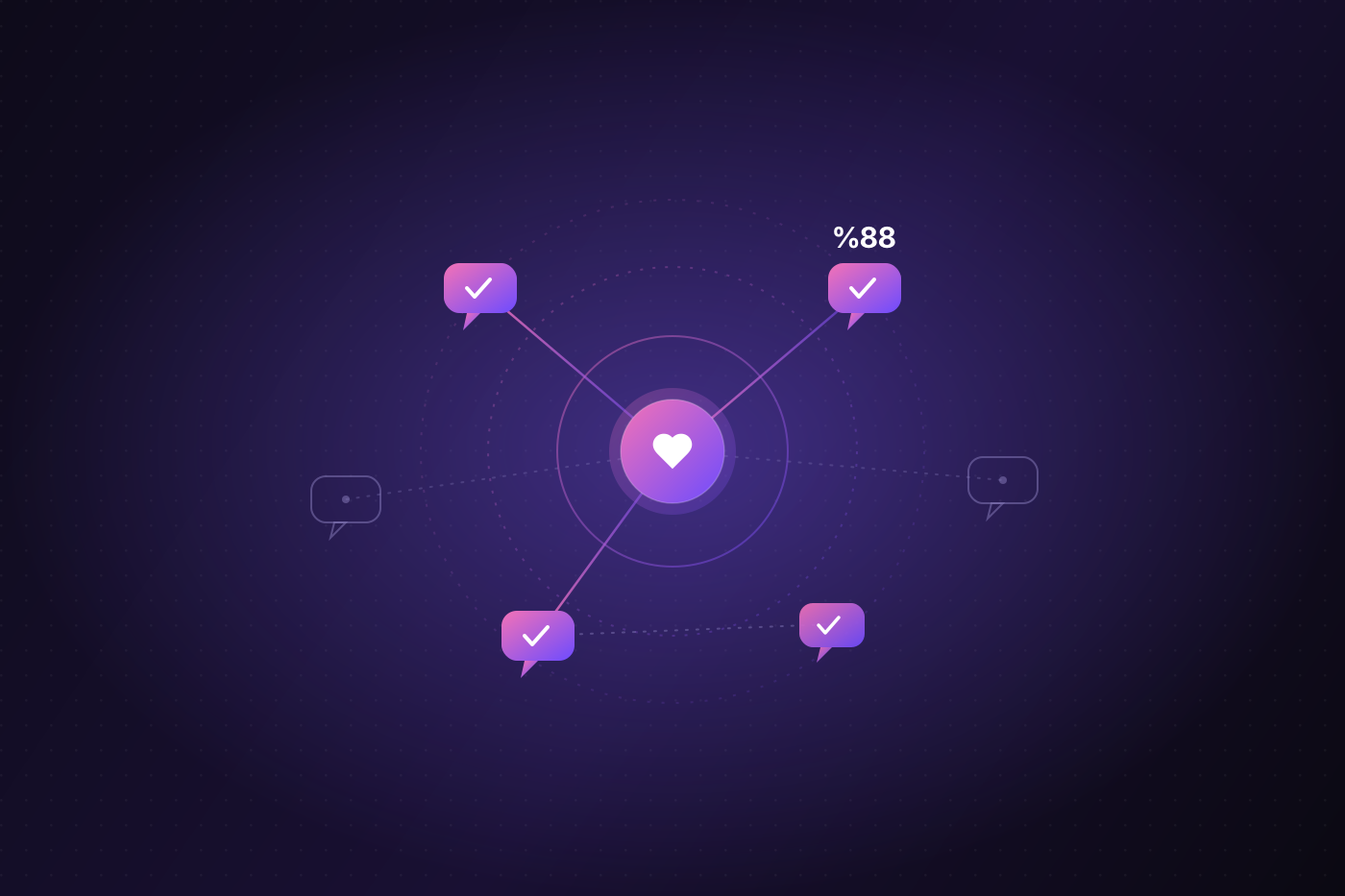
The clearest trace of bot and bought engagement is in the content of the comments. “Amazing 🔥”, “so nice”, strings of meaningless emojis, and template sentences that never touch the content raise suspicion. A real audience reacts to the content: it asks, shares experiences, argues. We covered how to tell comment tone apart at scale in our piece on comment sentiment analysis.
AI-powered analysis makes this easier. By reading each comment individually and telling apart “a real conversation” from “a hollow template,” it can measure how much of the engagement is actually meaningful.
4. Audience–content mismatch
The profile of the commenting accounts is also a signal. If the content speaks to a local, English-speaking audience while most comments come from unrelated, foreign-language, or profile-less accounts, the audience’s authenticity should be questioned. If your campaign’s target audience and the creator’s real audience don’t overlap, the outcome stays weak no matter the reach.
Why does this matter so much?
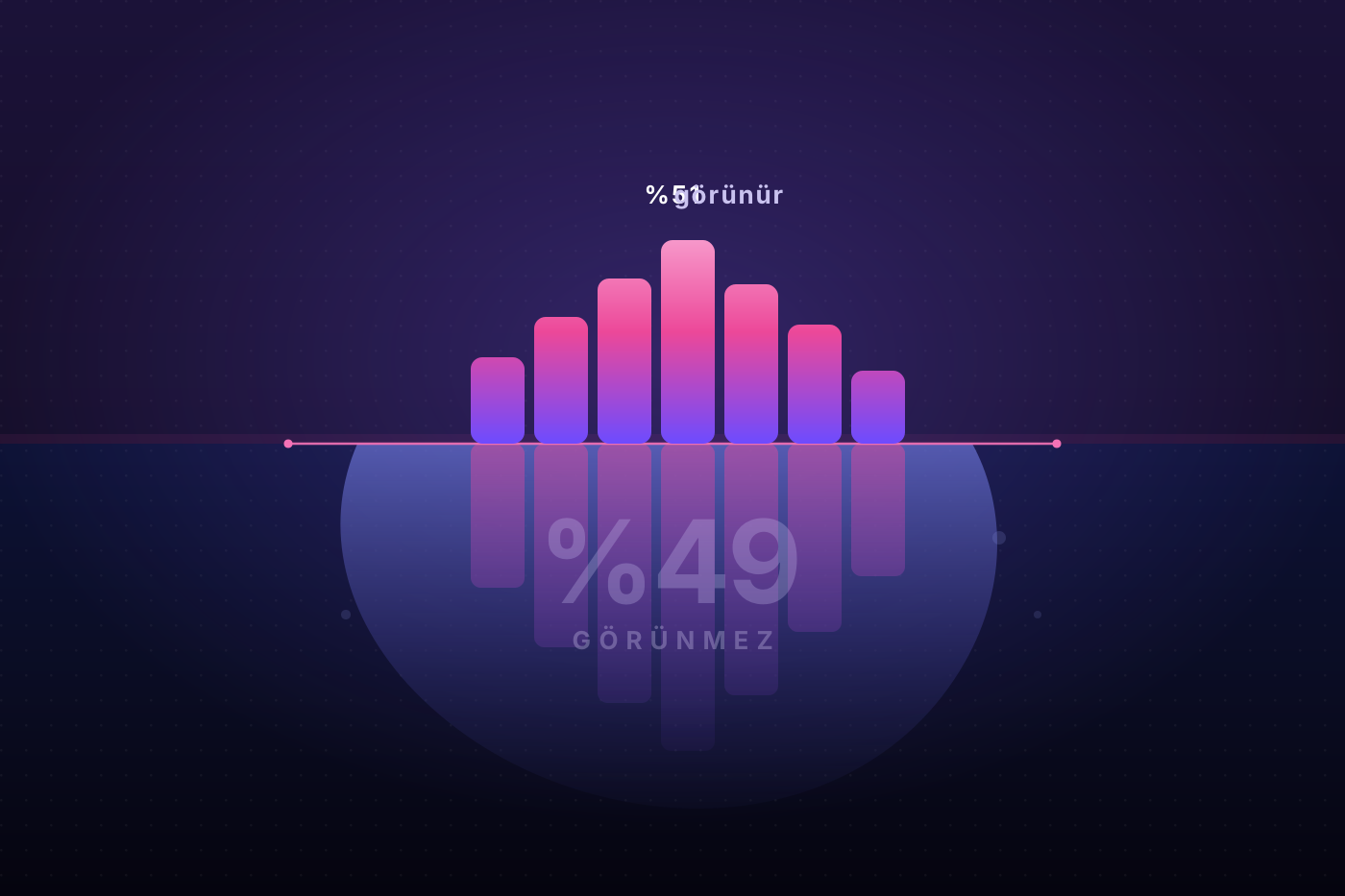
Working with an inflated account is not just wasted budget; it is also mislearning. In a scenario where a campaign looks “unsuccessful” but the audience was never real, you might blame the wrong product or message instead of the wrong creator. Measuring authenticity upfront puts every later decision on clean ground.
How to run a fake follower analysis
In practice, a fake follower analysis means reading the four signals above together rather than one at a time. Check them in order: (1) is engagement reasonable for the follower size, (2) are there unexplained spikes in the growth curve, (3) are the comments a real conversation or a generic template, (4) does the commenting audience overlap with the content’s target audience. It’s the account’s overall pattern — not a single post — that decides.
The most tedious of these steps is reading every comment. That is exactly what Vibemetri does: it evaluates each comment individually with AI and shows how much of the engagement is meaningful versus hollow template. To see an account’s engagement authenticity, take a look at Vibemetri.
Summary
Authenticity is understood by reading four signals together: follower-to-engagement balance, the growth curve, comment quality, and audience fit. None of them delivers a verdict alone; but evaluated together, they reveal an account’s real value with surprising clarity. Seeing this picture before deciding on a collaboration is the cheapest insurance there is.