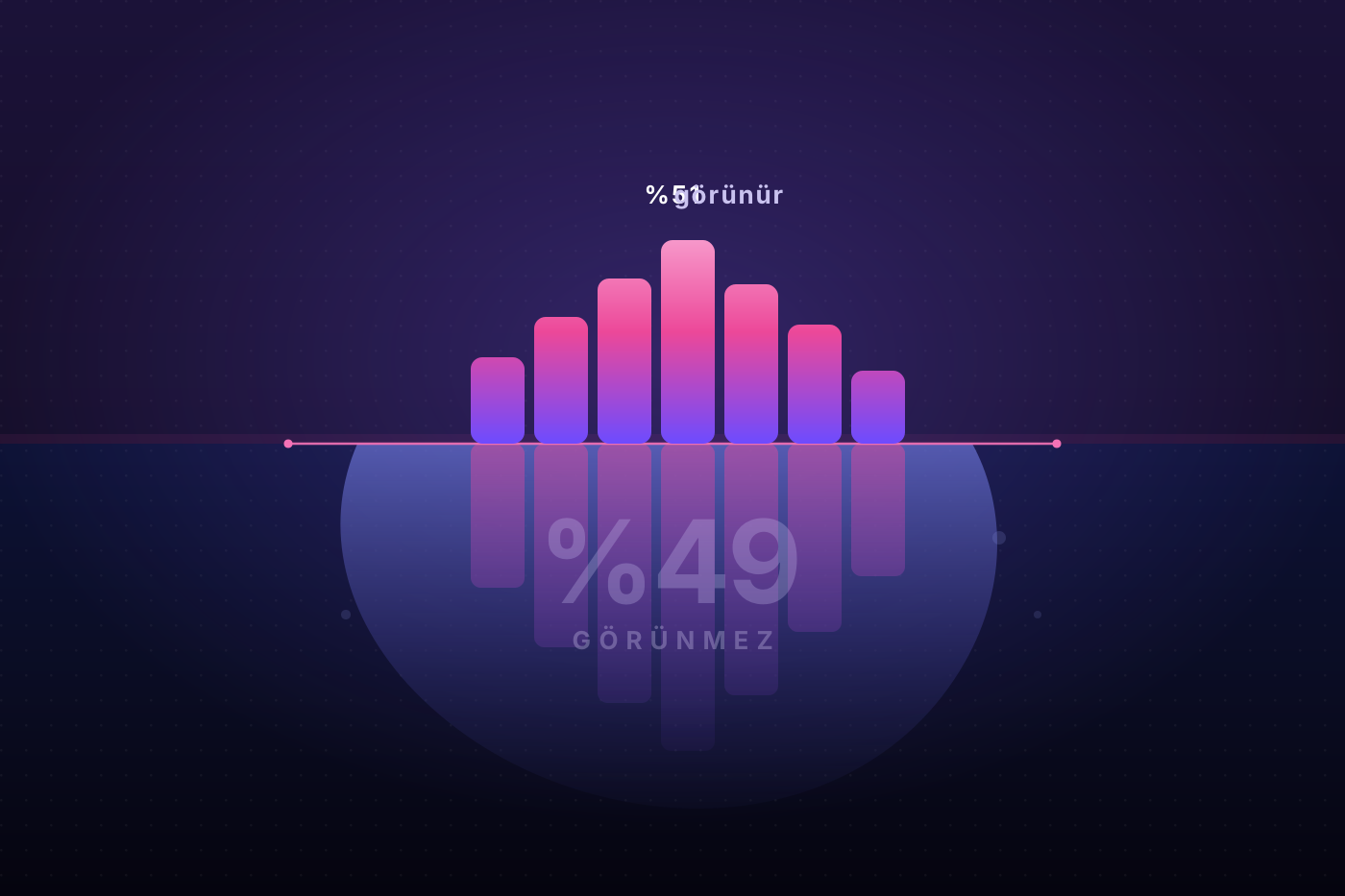
When a campaign ends, the first place everyone looks is likes and follower count. Yet these two numbers say very little about whether the campaign actually worked. Being seen, being liked, and being remembered are very different things — and a brand’s budget can burn right in the gap between them.
In this article we explain why surface metrics mislead, and which signals you should read to see a campaign’s real impact.
Why surface metrics mislead
A like count can show how much a post was seen; but it says nothing about what was felt beyond being seen. If a heavily-liked post has sarcastic comments, draws an audience with no interest in the product, or is filled with generic “nice post” one-liners, that engagement is not adding value to the brand.
Surface metrics measure volume, not meaning. A post can be viewed millions of times without a single one of those views turning into purchase intent, brand recall, or a positive impression. Not confusing volume with meaning is the first rule of measurement.
Comments are the most honest data source
When people genuinely love or dislike a brand, they say so in the comments. They ask questions, share experiences, wonder about the price, or voice disappointment. A like is a single tap; a comment is a sentence — and inside sentences live intent, tone, and real interest.
That is why a post’s comment section is the most direct record of the mark a campaign left on its audience. The problem is that reading thousands of comments one by one and drawing a consistent conclusion is not practical by hand. This is exactly where AI-powered analysis comes in: it reads every comment individually, classifies it by tone, intent, and authenticity, and then turns it all into a legible picture.

Whatever a brand’s audience feels, that is the campaign’s real result.
Four signals you should measure
Reading the comments through these four signals reveals the truth surface metrics hide:
- Sentiment (emotional tone) — Is praise, indifference, or disappointment dominant? A sarcastic or negative tone can hide an adverse result beneath high engagement.
- Purchase intent — Questions like “Where did you get it?”, “How much is it?”, “Is there a link?” show real commercial interest. These signals are far more valuable than a like.
- Engagement quality — A shower of generic emojis and one-word comments, or real conversations and shared experiences? Quality beats quantity.
- Audience authenticity — How much of the engagement comes from real accounts? Inflated or bot-heavy engagement distorts every metric.
Read together, these four signals answer “was the campaign a success?” with a clarity a like count could never provide.
A tip: consistency over one-off spikes
Instead of judging a single campaign, compare several posts from the same creator. (When choosing the right creator, consistency is the most reliable signal too.) One post doing well can be luck; but a creator’s posts consistently producing positive tone and real interest is a pattern. Consistency is a far more reliable signal than a one-time spike, and it puts your next collaboration decision on much firmer ground.
From report to decision
The goal is not to collect data but to make a decision. A good campaign report should tell you clearly: which creator to continue with, which message landed, where to shift budget, and what not to repeat.
AI-powered analysis reads thousands of comments against these four signals and condenses scattered data into a single decision table. The post-campaign conversation then moves past vague sentences like “it got a lot of likes” toward something concrete like “the audience loved the product, purchase intent was strong, we should continue with this creator.”
When you measure correctly, your campaign budget becomes an investment, not a guess. To set that budget right from the start, it’s worth looking at how influencer fees are determined.